
By Adrian Klein
I am often asked to respond about my favorite areas in Oregon. Although I can name many I seem drawn to high desert country of Central Oregon. Maybe it’s the soggy and rain filled city I call home most of the year yet I feel it’s more than that. The smells, sights and sounds rarely disappoint me whether it’s in the John Day monument triple-header or further south into the Cascade Lakes area.
Let’s focus on John Day National Monument location. You might ask why I am going to talk about an area that is a national monument since it obviously must be over photographed. The reality is this place continually is under visited. On a holiday weekend several years back my car died and I waited hours for the next visitor to give me a jump paints the picture well. Trust me I am not sorry about this in the least. I hope it continues in all honesty. Yet I decided to take this time and talk about the area since after all part of the goal of this blog is sharing stories on photographic locations.
The John Day National Monument area is comprised of three separate and distinct units. There is the Painted Hills Unit, Sheep Rock Unit and Clarno Unit. Unlike some national monuments these are not right next door to each other. You will spend over a 100 miles driving to see all three. Photography aside it’s not something I would put on the list for a day trip if you want to visit all of them. Along those lines you will see that I don’t weigh all areas the same. I certainly have a preference of where I like to spend my time.

Painted Sunset. The Painted Hills during a winter sunset after waiting for a break all day.
Getting There:
This really depends on where you want to start and end. Coming from Portland the couple times I have done all three I did the route Painted Hills to Sheep Rock to Clarno. This image is a link to a map that will help you decide the right route for you. From Portland I normally take highway 26 over Mt Hood through Prineville. The starting point for the loop is only 3.5 hours from Portland and is a nice scenic drive.

John Day National Monument Map
Painted Hills Unit:
Let’s start with my favorite. Obviously if you have followed my work online for any amount of time this comes as no surprise. Since my first visit almost five years ago I have been back at least once (but usually more) every year since. This monument is surprisingly small. There are five main areas to check out all within a couple miles of each other and only two that require any hiking for the best views.
On my most recent trip I spent the morning sipping freshly made coffee and eating breakfast from the tail of car while watching the sun continue to rise into the morning sky. Then I quickly realized the lighting situation was setting itself up to be fantastic, packed up my food and headed out for more photography before leaving this area for the day. The results are these couple images.

Shades of Gold – The leaf hill area of the Painted Hills lit up through storm clouds shortly after sunrise.

One of the main hills at the Painted Hills basks in the sun shortly after sunrise as the storm clouds fly on through.
Sheep Rock Unit:
Next in line for me is the Sheep Rock unit. Primary spots to visit here are Cathedral Rock and the Blue Basin. Cathedral Rock sits along the highway with limited parking opportunities. The best option is slightly down the road where there is a pull-off and then walking along the road to get the view you want.
More time will certainly be spent at Blue Basin whether you are doing the short Islands in Time trial or the longer and steeper Overlook trail. Really I would suggest both if you have the time. If the weather is bright sunny skies with no recent rain fall you might be disappointed as it won’t have the pop of blue-green that you are expecting. The best weather to visit in will be in the rain (or just after) or during stormy skies.
Part of the Sheep Rock unit is the Thomas Condon Paleontology Center that is worth a quick tour. Despite it’s small parking lot this along with the other areas is never that busy and it will give you some interesting insight into the area which was vastly different thousands and millions of years ago. You can also see paleontologists at work through a couple live viewing windows.

Taken while hiking the Blue Basin Overlook trail while storm clouds pass swiftly over my head.

A blue waterfall flows through the Blue Basin area during intermittent rain showers on cool wet spring day.
Clarno Unit:
The Clarno unit (although part of the John Day National Monument) in my honest opinion would be worth skipping if there was not another wilderness area near that also had photogenic appeal. The main part of the Clarno Unit is the Cliffs of the Palisades which can be seen from the road or up close on a short hiking trail that runs right underneath them.
When you feel you have toured the Clarno Unit to your liking what’s next? I am glad you asked. I mentioned another nearby location. It’s the Spring Basin Wilderness. I actually took the time to stop there for the first time this year. It’s very close and when I was there it was me, myself and I. Not a sole around which is likely more common than exception. You can photographic the hills from down below like I did this time or hike them. Since I was not there in spring when the wildflowers are blooming I chose to pass on the hike until my next visit.

The sun rises behind the wall known as Palisades Cliffs.

Spring Basin Wilderness as light dances around the meadows and mountains shortly before sunset.
When To Go:
In all three of these locations there are is little to no shade. Trees are sparsely populated. For this reason I avoid these locations in summer as I prefer cool over warm. Plus in summer you are most likely to get clear skies with less chance of good atmospheric conditions.
My preference is spring, winter and fall in that order. Spring has a couple different opportunities for flowers in the cracks of the Painted Hills as well as the surrounding hill you can hike on. And you may find some flowers in the other units of the monument yet will be fine choices in fall and winter as well. Take note that in winter highs sometimes will barely get above freezing and likely have the place to yourself.
Lodging:
One of the reasons these places are under visited is they fortunately lack much in the way of lodging or camping opportunities. If you are not okay “roughing it” then you may be getting up real early or getting to bed real late to see any of these places in the golden hours.
In all three units there is no great solution. This is why I always say that requirement #1 for any car I own is one that I can sleep in it. I usually find a place outside of the monument units along side the road that I can park for the night. Since I normally don’t pull in till after dark and typically leave before sunrise it’s never an issue.
If you need a bed to sleep then you can normally find a bed & breakfast/ranch retreat in one of the near by small towns.
Final Words:
If you enjoy the photos you see here and this seems like your kind of place then you should certainly add it to your bucket list. Despite all my visits I still look forward to visiting again and again. If you visit at the right time you will find a chance for solitude and photography. Getting those together at a National Monument is not often. Enjoy your visit if you make it and feel free to share your story and photos with me. More of my work in these area can be seen at my website: http://www.adrianklein.com/ . Explore, learn and create.
Location: Portland, OR
Website: www.adrianklein.com
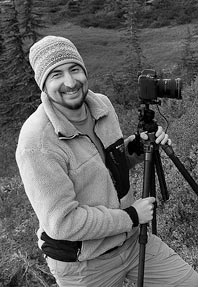
Adrian Klein has a passion for the outdoors and landscape photography that is endless. He has traveled the parks, shorelines and wilderness capturing images that represent each area through his own artistic eye from the curbs to the far off trails.
Recent Comments